
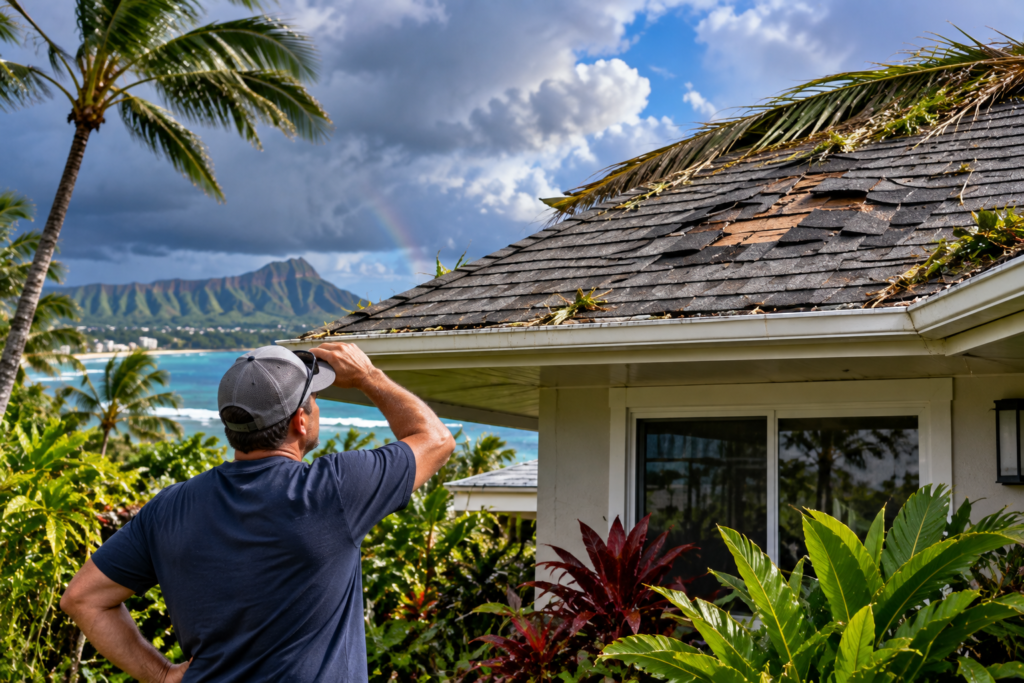
Protect Your Home Before the Next Rain Hits
Storms in Hawaii can come fast and hit hard — from heavy rain squalls to powerful Kona winds and even tropical cyclones. After any major weather event, your roof is your first line of defense. Knowing how to spot early signs of storm damage can save you thousands in repairs and prevent long-term structural issues.
1️⃣ Why Storm Damage Is Different in Hawaii
Island weather is unique. High humidity, salty ocean air, and strong trade winds combine to create wear patterns that mainland homeowners rarely see. Even light storms can loosen flashing, lift shingles, or allow water intrusion in hidden spots.
Common Hawaii-specific stress factors:
- Salt corrosion on fasteners and flashing
- UV damage from year-round sunlight
- Heavy rainfall pooling on flat or low-slope roofs
- Gusty wind uplift from passing systems
2️⃣ Start With a Ground-Level Inspection
Before climbing up, walk around your property and observe your roof from the ground.
Look for:
- Missing or lifted shingles
- Dark streaks or new discoloration
- Debris buildup in gutters or valleys
- Pieces of roofing material on the ground
Take photos from multiple angles — they’re useful for both your roofing contractor and insurance claim.
3️⃣ Check for Leaks and Interior Clues
Inside your home, subtle signs can reveal roof problems long before you see water dripping.
Watch for:
- Yellow or brown water stains on ceilings
- Bubbling or peeling paint near the attic
- A musty smell after heavy rain
- Mold or damp insulation in attic spaces
If you notice any of these, you may already have moisture intrusion.
4️⃣ Inspect Gutters and Flashing
Your gutters and flashing work together to channel rainwater safely off your roof. After a storm:
- Clear out leaves, palm fronds, and debris
- Check for bent or detached flashing around chimneys, skylights, and roof vents
- Look for rust spots or sealant gaps
Flashing failures are one of the most common sources of leaks after tropical storms.
5️⃣ Pay Attention to Roof Type
Different roofing materials in Hawaii show storm wear differently:
| Roof Type | Common Storm Issues |
|---|---|
| Asphalt Shingle | Lifted tabs, granule loss, broken sealant strips |
| Metal Roofing | Loose screws, denting, flashing displacement |
| Tile Roofing | Cracked or dislodged tiles, ridge cap movement |
| Flat Roofs | Ponding water, blistered coatings, soft spots |
6️⃣ When to Call a Professional
If you see signs of damage — or even if you’re unsure — it’s best to schedule a post-storm inspection. Hawaii’s licensed roofing contractors have safety gear and experience spotting hidden issues.
A professional inspection can:
- Identify weak points before leaks start
- Provide documentation for insurance
- Offer repair or replacement estimates fast
7️⃣ Insurance Tips for Storm Damage
Most homeowner policies cover storm-related roof damage — but documentation is key.
- Take photos immediately after the storm
- Keep repair receipts
- File claims quickly (insurers often have 30–60 day limits)
- Get an inspection report from a licensed contractor
🌈 Stay Protected Year-Round
Storms can strike any island, any season. Regular roof maintenance, clear gutters, and proactive inspections keep your home dry and your investment secure.
🌺 Need a Roof Inspection in Hawaii?
At HawaiiRoofs.com, we connect you with trusted local roofers who know how to handle storm damage, insurance paperwork, and long-term protection in Hawaii’s unique climate.
👉 Schedule Your Free Roof Inspection — it only takes a minute to get matched with licensed Hawaii roofing experts near you.